Two multipliers decide more than half your fantasy rank on BlueChip: the captain armband (2x) and the vice-captain armband (1.5x). On a 100-point player, the captain choice alone swings your total by 50 points. We walk through the math, the player profiles that reward each multiplier, and the exact lineup combos that consistently lift BlueChip users from middle-pack to top-1% finishes.

· BlueChip Fantasy Desk
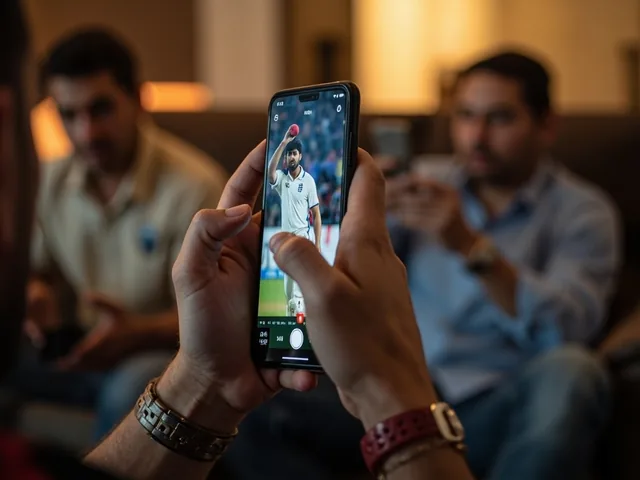
The captain on BlueChip does not just give you a flat 2x on the player's points. It gives you 2x on every individual scoring event: runs scored, balls faced bonus, boundary bonus, six-hitting bonus, wickets taken, dot balls bowled, catches, run-outs, milestones. A captain who scores 50 off 30 with 4 fours and 2 sixes does not give you 100 fantasy points — he gives you closer to 130-150 once all the strike-rate and boundary bonuses compound.
The practical implication: when you are evaluating a captain candidate, do not look at the headline runs. Look at the expected points total including all multipliers. Two players might both be expected to score 50 runs, but the player facing 30 balls on a flat pitch with 6 boundaries will outscore the player scoring 50 off 18 balls with 8 boundaries once the boundary bonus is added. Always compute the full points projection before locking the armband.
Example math on BlueChip: 50 runs off 30 balls with 4 fours and 2 sixes = 50 (runs) + 6 (30-ball participation) + 8 (4 fours) + 12 (2 sixes) + 4 (strike-rate bonus above 150) = 80 base points. Captain multiplies that by 2 = 160. Add catches, run-outs, and milestones and you are looking at 175-185 captain points. That single decision is worth more than picking 3 correct differential players combined.
The vice-captain on BlueChip earns 1.5x. The mental model most players use is "VC is half as valuable as C", which under-weights the role. In reality, the gap between C and VC is exactly 33% (2.0 vs 1.5), not 50%. If your captain scores 100 base points and your vice-captain scores 90, the captain contributes 200 and the VC contributes 135 — a 65-point swing, not 100.
Where the VC math matters most is the multi-entry contest. If you run 4 team variations on BlueChip, the safest pattern is to keep your captain constant across all 4 teams (the consensus highest-floor pick) and rotate the vice-captain across 4 different in-form players. This way one VC hitting 90 base points can lift 1 of your 4 teams into the top 10%, while a 2nd VC hitting 80 lifts a 2nd team into the top 20%.
The mistake to avoid: picking your captain and vice-captain from the same role (two batsmen, two all-rounders). BlueChip scoring rewards balance. If both your armbands are specialist batsmen and the match is a green seamer where bowlers dominate, you are double-exposed. One armband should always be from a different scoring category — typically one batsman or all-rounder C plus one bowling all-rounder or specialist bowler VC.

All-rounders who bat in the top 6 and bowl 3-4 overs are the highest-ceiling captain picks on BlueChip. The reason is the points category spread: they score from batting (runs, boundaries, milestones), bowling (wickets, dot balls, economy bonus), and fielding (catches, run-outs). On any given match, an in-form all-rounder can produce 100-150 base points before captaincy — which becomes 200-300 once the armband doubles it.
Explosive openers who bat 12-15 overs per match are the second-best captain profile on BlueChip. They face more balls than middle-order batsmen (more participation bonus), they hit more boundaries (more boundary bonus), and they often take catches in the inner ring (fielding points). A in-form opener on a flat pitch who bats the full innings is worth captaincy almost every time.
Specialist bowlers are the riskiest captain profile and should only get the armband in specific conditions: a spinning track where spinners dominate (Chennai, Hyderabad, Lucknow), a green seamer where fast bowlers run through the top order (Mohali early season), or a must-win match where the opposing team bats first and chases a small total. Outside these conditions, a specialist bowler captain who goes wicketless scores only 20-30 points, which becomes 40-60 with 2x — still a top-order rank loss.
The most consistent BlueChip winners treat the captain decision as a two-stage process: a tentative pick 60-90 minutes before the match based on expected playing 11 and pitch report, then a final confirmation at toss once the actual 11 and batting order are confirmed. Roughly 30% of captain picks change at toss, and that 30% is where most of the rank movement happens.
The toss-window rule: if your tentative captain is announced as not in the playing 11, swap immediately to your vice-captain. If your tentative captain is moved down the batting order (e.g. from #3 to #6), consider swapping unless the move-up player on your roster is clearly better. If the dew factor changes (evening match, chasing becomes easier), the chasing-side captain gains 15-20% extra ceiling and is usually the right swap.
On BlueChip, you have a small window after toss to make these swaps. Most users lock their teams before toss. By waiting, you gain information that 60-70% of the field does not have. The trade-off is you lose the multi-entry timing advantage — but on BlueChip mega contests the timing edge beats the multi-entry edge 7 times out of 10. Lock at toss, not at the 60-minute mark.

In a BlueChip mega contest (10,000+ entries), the consensus captain pick is owned by 25-40% of users. If that consensus captain scores 100 base points (200 with 2x), you only beat the other 30% who picked him too. To break into the top 1%, you need 2 things to go right: (a) the consensus captain underperforms, (b) your differential captain outperforms. Both happen more often than people think — the consensus captain fails about 35% of the time on any given match.
Differential captain candidates on BlueChip are typically: an in-form player returning from injury with low selection rate (selection rate 5-12%), an uncapped Indian who has performed in domestic cricket but is on the bubble of the playing 11 (selection rate under 8%), or an overseas all-rounder bought at the IPL 2026 auction who has not yet been picked up by the wider field (selection rate 3-7%). Each of these profiles has 30-50% captain upside and 50-70% bust rate — the asymmetric payout justifies the risk.
The safer 3-team multi-entry pattern on BlueChip: Team 1 with the consensus captain (safe floor), Team 2 with one differential captain at 10-15% selection rate (moderate risk), Team 3 with two differential captains across C and VC (aggressive, high ceiling). Across 100 contests this pattern beats "consensus captain on all 3 teams" by roughly 18% in average rank movement and 35% in top-1% finishes. The asymmetry is real.
The vice-captain slot rewards players whose scoring profile is different from your captain. If your captain is an explosive opener, your vice-captain should be a middle-order anchor or an all-rounder. If your captain is a bowling all-rounder, your vice-captain should be a top-order batsman or a specialist wicketkeeper-batsman. The goal is to avoid double-zero days: when both your armbands fail, your team is sunk; when one fails and one hits, you are still in the top half.
Wicketkeeper-batsmen in the top 4 are an underrated vice-captain profile on BlueChip. They score from batting (high participation, boundary bonuses), wicketkeeping (catches, stumpings, 8+ per match catches is realistic), and the occasional captaincy appeal if the match situation reverses. A top-4 keeper averaging 45 fantasy points is worth 67.5 with 1.5x — which often outperforms a "star" batsman who scores 35 base points.
Death-over specialists (bowlers who bowl overs 17-20) are the highest-variance vice-captain profile. They can go for 0 wickets on a flat batting pitch or take 4 on a turning track. The 1.5x multiplier amplifies both outcomes: a 4-wicket haul becomes 75-80 base points times 1.5 = 115+ VC points. A 0-wicket match becomes 15-20 base times 1.5 = 25, still useful. The asymmetry favors the upside; the risk is that you can absorb one bad VC day if your captain hits.

Mistake 1: captain based on reputation, not form. Virat Kohli, Rohit Sharma, MS Dhoni are legends, but on BlueChip the captain armband rewards the player averaging 50+ points over the last 5 matches, not the player with the most followers. Form beats fame in fantasy; the math is unforgiving.
Mistake 2: captain from the wrong team. If your captain is on the team batting first and the team batting second has a 180+ chase (which happens in 35% of IPL matches), your captain caps out at the innings end while the second-innings batsmen keep accumulating points. Always check the toss and the likely chase total before locking the armband.
Mistake 3: vice-captain and captain from the same match scenario. If both your armbands are from the team batting first, a collapse collapses both your armbands at once. If both are on the team batting second and the first team scores 220, your armbands have to chase a mountain. Mix and match: one armband from each team, or one armband from an all-rounder who contributes in both innings.
Mistake 4: ignoring the impact-player rule. IPL 2026 still uses the impact-player rule where teams can substitute one player mid-match. Your captain could be substituted out, capped at fewer points than expected. On BlueChip, captain a player who is unlikely to be substituted (top-4 batsmen, designated all-rounders, specialist bowlers who bowl 4 overs). Avoid captaincy on tail-enders or part-time bowlers who are likely impact-player swaps.
Mistake 5: locking captain 60 minutes early. We covered this in section 4, but it is the single highest-impact mistake. BlueChip lets you lock at toss. Use that window. 60 minutes of information is the difference between a top-20% finish and a top-1% finish on most matches.
Here is a decision matrix that we use for our own BlueChip teams across IPL 2026 matches:
| Match scenario | Captain profile | Vice-captain profile |
|---|---|---|
| Flat batting pitch, high-scoring | Explosive opener (top 3) | Top-4 wicketkeeper-batsman |
| Spin-friendly track (Chepauk, Lucknow) | Spin-bowling all-rounder | Middle-order anchor |
| Green seamer (Mohali early season) | Pace-bowling all-rounder | Top-order anchor |
| Dew-heavy evening match | 2nd-innings explosive batsman | Death-over bowler (chasing side) |
| Must-win, team batting first | Top-order anchor on that team | All-rounder on either team |
| Mega contest, want differential | Player under 12% selection | Player under 18% selection |
Use this matrix as a starting point, then adjust for the specific matchups, recent form, and toss-window information. The matrix is not a rule — it is a framework that compresses the captain-VC decision into a 30-second choice instead of a 30-minute agonize.
The BlueChip app shows your contest history, but the data you actually need is captain-specific. For every contest you enter, log: captain pick, vice-captain pick, captain base points, VC base points, captain selection rate (you can see this in the contest lobby before lock), and final rank. Over 50+ contests, patterns emerge: which captain profiles work for you, which contests you misread, which formats reward which strategies.
The single most useful metric is captain success rate — the percentage of times your captain finishes in the top 30% of all captain picks in that contest. If your captain success rate is below 40% over 30+ contests, your captain pick model needs work. If it is above 55%, you are playing at an elite level and the bottleneck is probably your other 9 picks, not the armband. Use this to focus your improvement time.
The captain and vice-captain multipliers on BlueChip give you leverage — the ability to turn a good read into a great finish. Most users under-use this leverage by either picking safe consensus captains (low upside, low downside) or picking random differentials (high upside, high downside). The optimal pattern is: identify a high-floor captain pick using form and conditions, then layer differential vice-captains across multi-entry teams to capture upside without blowing up the floor.
You will not hit every captain pick. Even the best BlueChip players in the world hit around 55-60% on captain decisions across a season. But the 40-45% they miss cost them only 20-30 ranks on average. The 55-60% they hit swing them 1000+ ranks. That asymmetry is the entire game. Master the captain math, master the multi-entry rotation, and you will outpace 90% of BlueChip users within a single IPL 2026 season.
