The ICC Anti-Corruption Tribunal has banned USA cricketer Bodugum Akhilesh Reddy for eight years after finding him guilty of three breaches tied to the 2025 Abu Dhabi T10, backdated to 21 November 2025. BlueChip reads the ruling, the three Articles violated, the team-level approach that triggered the investigation, and what the public decision signals about integrity checks across the T20 and fantasy-app ecosystems where these matches run.

· BlueChip News Desk · Comparisons
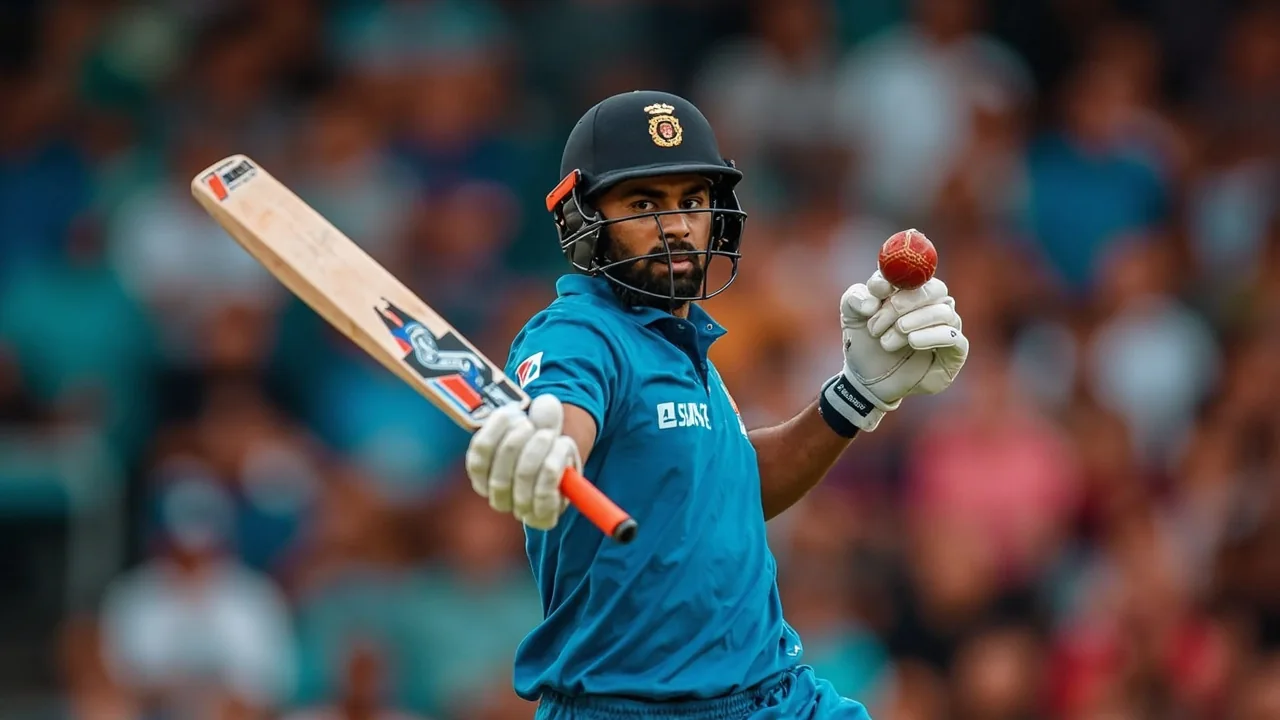
The ICC Anti-Corruption Tribunal handed Bodugum Akhilesh Reddy, a 26-year-old USA cricketer, an eight-year ban from all forms of cricket. The ruling is dated to the August 2026 announcement window reported by Cricketnmore, and the suspension itself runs from 21 November 2025 — the date of his initial provisional suspension.
Reddy was found guilty of three separate breaches of the ICC Anti-Corruption Code. The first is Article 2.1.1, which covers fixing or contriving to influence the result or any aspect of a match. In this case, the article was applied to the 2025 Abu Dhabi T10 (ADT10 2025). The second is Article 2.1.4, which addresses soliciting, inducing, or encouraging another Participant to breach Article 2.1.1. The third is Article 2.4.7, which covers obstructing the investigation by the Designated Anti-Corruption Official — in this case, by deleting WhatsApp text messages and call logs from a mobile device.
Three Articles, two of them substantive match-fixing breaches and one of them an obstruction charge, is a heavy combination. Eight years is at the upper end of what the Anti-Corruption Code allows for a first-tier case of this nature, and it runs alongside the standard disqualification of results for any match in which Reddy participated.
The eight-year suspension applies across every recognised format and competition under the ICC umbrella — international cricket, franchise leagues, associate tournaments, and bilateral series. A player banned under the ICC Anti-Corruption Code is not eligible to participate in any match under the jurisdiction of an ICC member board for the full eight-year period, including matches that feed fantasy-app contest cards.
The factual record the tribunal relied on is specific and time-stamped. On the morning of 19 November 2025, in a hotel room shortly before the opening match of the Aspin Stallions, Reddy asked a teammate referred to in the ruling as Player A to "give runs" — concede extra runs while bowling — at the behest of team management. The phrase used in the tribunal finding is the colloquial one that has appeared in anti-corruption education materials for years: bowl in a way that produces wides or boundary balls at predictable moments.
Player A refused. He then reported the approach to the ICC Anti-Corruption Unit. Within a short window of that report, Player A was dropped from the starting XI shortly before the match. The sequence — approach, refusal, report, exclusion from the XI — is exactly the pattern that anti-corruption frameworks are built to catch, and it is the pattern the tribunal built its obstruction charge against Reddy on top of.
Three procedural points matter for anyone reading the ruling closely. First, the corrupt approach was a team-level instruction rather than a third-party betting syndicate contact. Second, the refusal was logged through the ICC's own reporting channel, not through a franchise operator. Third, the obstruction charge (deleting WhatsApp messages and call logs) was added because the investigation team found the device was missing material that should have been preserved under the participant's duty to cooperate.
The three-member tribunal was chaired by Michael J Beloff KC, with Justice Kate O'Regan and Lloyd Mhishi as the other two members. Beloff KC is a long-standing chair of ICC tribunals and has overseen a number of high-profile integrity cases. Justice O'Regan brings a senior judicial background from the South African Constitutional Court. Lloyd Mhishi is a Zimbabwean lawyer with extensive sports-law experience. The combination is intended to give the ruling both legal weight and familiarity with cricket's specific disciplinary environment.
The Designated Anti-Corruption Official for the Abu Dhabi T10 league was not an internal ECB officer. The Emirates Cricket Board had appointed the ICC itself as the DACO for that tournament. That appointment matters because it means the investigator, the prosecutor, and the deciding tribunal were all drawn from the same international body rather than from the host nation's domestic cricket administration — a structural choice designed to keep host-board conflicts out of franchise-league integrity cases.
| Article | What it covers | What Reddy did |
|---|---|---|
| 2.1.1 | Fixing or contriving to influence the result or any aspect of a match. | Engaged in conduct intended to influence the result or an aspect of the ADT10 2025 fixture in question. |
| 2.1.4 | Soliciting, inducing, or encouraging another Participant to breach Article 2.1.1. | Asked Player A to concede extra runs while bowling at the behest of team management. |
| 2.4.7 | Obstructing the DACO investigation, including by concealing, destroying, or altering records. | Deleted WhatsApp text messages and call logs from a mobile device that was material to the investigation. |
The table above is the practical scoring card of the ruling. Article 2.1.1 is the substantive fix charge. Article 2.1.4 is the solicitation charge that catches the recruiter. Article 2.4.7 is the obstruction charge that adds the investigative-misconduct penalty on top. A player charged under all three — instead of, for example, just 2.1.1 — has compounded the original breach by interfering with the evidence base the tribunal needed.
Reddy made his international debut against the Cayman Islands in the North America T20 Cup and has featured in four T20Is for the USA, taking one wicket. That is a thin international record by volume, but a meaningful one by geography — he is part of a generation of associate-side USA cricketers who have come through franchise leagues as well as the ICC's qualification pathway. The eight-year ban will run past his thirtieth birthday and into the years when associate programmes are most likely to depend on experienced middle-order batters and seam-bowling all-rounders.
For the USA cricket set-up specifically, the ruling is a reminder that an associate programme that is gaining franchise-league exposure also inherits the integrity obligations that go with it. T10 tournaments in the Gulf are well-paid, well-televised, and increasingly well-scouted — and they sit firmly inside the ICC's anti-corruption perimeter.

Fantasy-app users care about this ruling for a reason that is not about the USA XI. It is about the integrity check underneath every contest card. BlueChip and its peers turn real-world cricket events into fantasy points, contests, and payouts. If a player in a fixture has been approached to manipulate the result, the underlying data points that feed the scoring engine are unreliable. Public, named anti-corruption rulings are how the sport shows that the integrity system is actually catching cases rather than quietly moving players on.
Three things in this specific ruling matter for that downstream trust. First, the approach was a team-level instruction, not an external betting syndicate. That is the harder corruption problem to police — the pressure comes from inside the dressing room, and the only real defence is a participant reporting it. Player A did exactly that. Second, the obstructing-the-investigation charge (Article 2.4.7) shows the tribunal will treat evidence-tampering as seriously as the original fix. Third, the ICC acted as the DACO for the ADT10 itself, which means the integrity perimeter around T10 franchise leagues is being run by the international body, not by host-nation boards that have a financial stake in the league running cleanly.
For Indian fantasy-app users who play contest cards on ADT10, Lanka T10, the Hundred, CPL, and similar short-format leagues, the practical implication is straightforward: when these leagues publish a player ban, treat it as part of the contest card's data integrity. A banned player does not score fantasy points because he does not play. An investigation that is still open is a soft signal that a league's integrity team has flagged something — that is also part of the data picture.
The phrase "give runs" — bowler concedes extra runs at predictable moments — has been a fixture of anti-corruption briefings for years. It is one of the simplest match-fixing patterns to describe and one of the hardest to detect in real time, because a bad over from a T10 bowler looks identical to a tired over or a genuine mistake. The detection work happens later, by matching the approach to the on-field behaviour, the betting market movement, and the participant's communications.
That is why the obstruction charge matters more than it looks. The tribunal is essentially saying: even if the on-field evidence of the fix itself is hard to read in isolation, the participant then deleted the messages that would have shown the chain of communication. That conduct is what tips the case from "plausible deniability" to "three-Article conviction". For a tournament organiser, this ruling is a clear precedent that device preservation duties are enforceable.
It is worth being explicit about what the published ruling does not establish. It does not name any other participants beyond Player A and Reddy. It does not quantify how much money, if any, was at stake in any betting market. It does not allege that the broader Aspin Stallions squad was aware of the approach. It does not extend to the team-management individuals whose instruction Reddy was reportedly carrying out — the ruling describes the conduct of the named player, not the chain of command above him.
For readers who want to track the wider picture, the tribunal record is the only public scorecard of what the integrity system has actually caught. Speculation about uncharged participants or unproven betting volumes is not part of this ruling, and treating it as if it were would distort the data picture that fantasy-app users rely on.
Indian fantasy-app users who play contest cards on associate and franchise T20 leagues are the downstream consumer of the integrity system that just produced this ruling. Three reading habits follow naturally from that.
First, when a league publishes an anti-corruption tribunal decision, read the Article numbers. Article 2.1.1 is a fix charge. Article 2.1.4 is a recruitment charge. Article 2.4.7 is an obstruction charge. Different articles imply different patterns, and that pattern changes how much weight to put on the league's other matches from the same window.
Second, watch for the DACO identity. If the ICC was the DACO — as it was for the ADT10 — that is a stronger integrity posture than a host-board DACO. For fantasy users, that is a soft positive signal about the underlying contest data.
Third, keep an eye on the participant who refused the approach. In this case, Player A is not named publicly. That is the standard anti-corruption practice — the whistleblower is protected. The practical effect for a fantasy-app user is that a tournament that produces a public ban without exposing the reporter is a tournament that is following the right procedures, and the integrity data underneath the contest card is trustworthy.
The Cricketnmore report of 3 August 2026 carries the factual record of the ruling, and the ICC's own media release archive is the canonical source for tribunal decisions of this nature. For readers tracking associate-side T20 integrity, the next signal to watch is whether the tribunal record publishes the names of any further participants — under the Anti-Corruption Code, charges against additional respondents can be filed after the initial ruling.
For BlueChip readers who use the comparisons note to think through which fantasy apps handle integrity disclosures most cleanly, the practical test is simple: does the app publish a clear note when a player in one of its contest cards is banned mid-tournament? Does it refund contests where the affected player was locked in the XI? Does it adjust captain points if the captain is the banned player? Those are the operational questions that turn a tribunal ruling like this from a headline into a contest-level outcome.
Anti-corruption enforcement is one of those areas where fantasy-app users feel the result before they see the rule. A player who has been approached to manipulate a match does not produce the kind of fantasy score his career form would predict. A team that is under investigation produces inconsistent totals. A tournament that quietly moves players on without publishing a ruling produces unexplained captain swings. The ICC's eight-year ban on Akhilesh Reddy is the integrity system doing exactly what it is supposed to do: catching the approach, protecting the reporter, publishing the Articles breached, and disqualifying the offending player from the sport.
For BlueChip readers, the takeaway is not to memorise the Article numbers. It is to recognise that a publicly published, named, multi-Article ruling is itself a positive signal — it is the integrity system telling the rest of the cricket and fantasy ecosystem that the data underneath the contest card has been policed, and the result is reliable enough to play on.
Bodugum Akhilesh Reddy is a 26-year-old USA cricketer who has played four T20Is since his international debut against the Cayman Islands in the North America T20 Cup. The ICC Anti-Corruption Tribunal handed him an eight-year ban from all forms of cricket after finding him guilty of three breaches of the ICC Anti-Corruption Code tied to the 2025 Abu Dhabi T10.
Article 2.1.1 (fixing or contriving to influence the result of a match in the ADT10 2025), Article 2.1.4 (soliciting or inducing another Participant to breach Article 2.1.1), and Article 2.4.7 (obstructing the DACO investigation by deleting WhatsApp text messages and call logs from a mobile device).
The eight-year suspension was backdated to 21 November 2025, which was the date of Reddy's initial provisional suspension. Backdating is standard practice so that the period of provisional suspension is counted against the final sanction.
On the morning of 19 November 2025, in a hotel room shortly before the opening match of the Aspin Stallions, Reddy asked a teammate referred to as Player A to give runs (concede extra runs while bowling) at the behest of team management. When Player A refused and reported the approach to the ICC Anti-Corruption Unit, he was dropped from the starting XI shortly before the match.
The three-member tribunal was chaired by Michael J Beloff KC, with Justice Kate O'Regan and Lloyd Mhishi as members. The Emirates Cricket Board had appointed the ICC as the Designated Anti-Corruption Official (DACO) for the Abu Dhabi T10 league.
Fantasy-app payouts are only as trustworthy as the integrity of the underlying match. Associate T20 leagues, Abu Dhabi-style franchise tournaments, and bilateral series all feed fantasy contest cards — when an anti-corruption tribunal publicly names Articles breached and imposes a hard ban, it confirms that the integrity system is actually catching cases rather than quietly moving players on. That is the kind of public enforcement fantasy users want to see.
BlueChip reads rulings like this so you know the data underneath your contest card has been policed. Compare apps on settlement speed, fee transparency, and integrity disclosure.
